📞 Call (859) 695-2900 — Free Estimate
Tree Trimming Lexington KY — Proper Pruning That Protects Your Trees
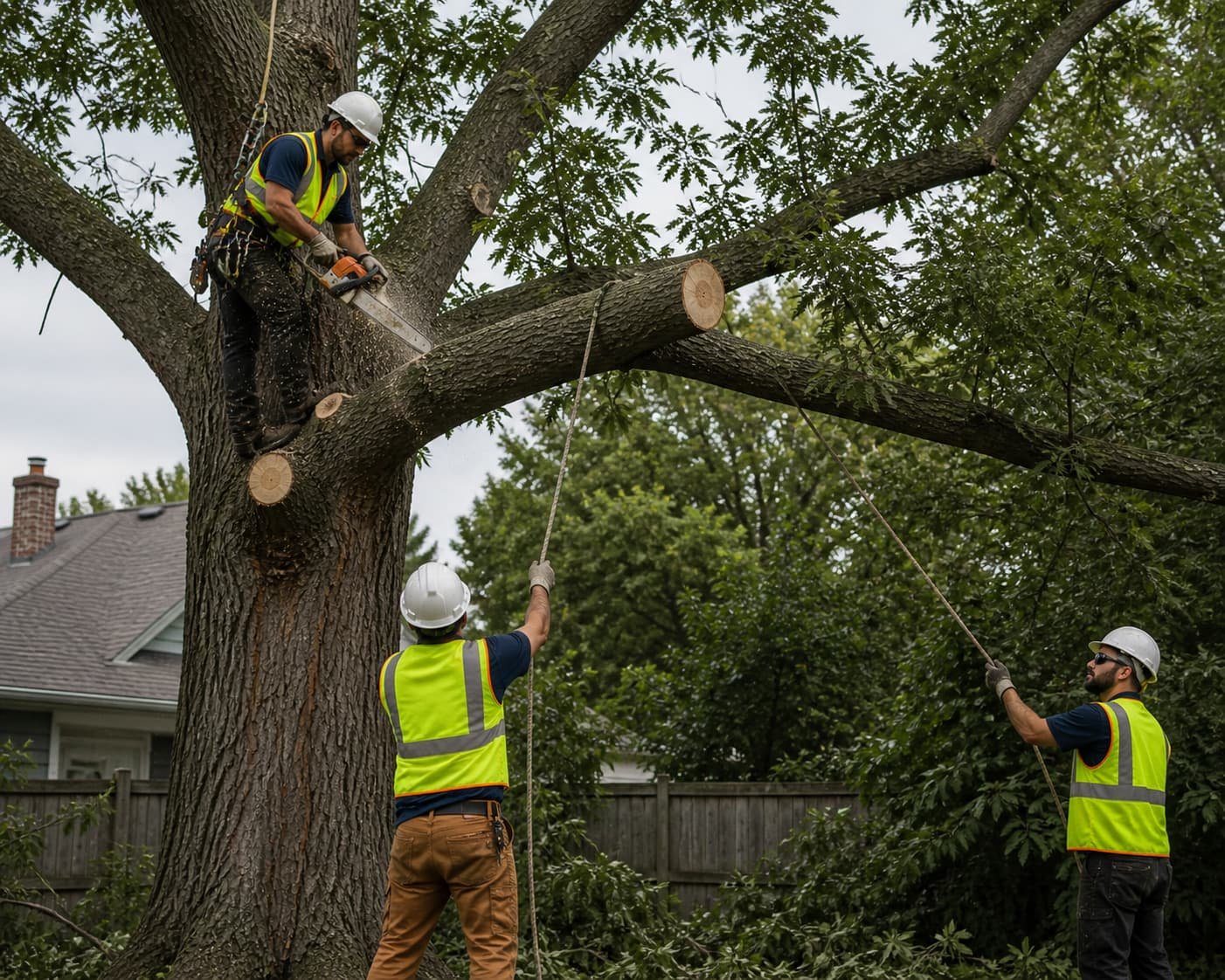
Tree trimming Lexington KY homeowners need goes well beyond cutting back branches that are in the way. Done correctly, professional pruning improves a tree’s structural integrity, extends its productive lifespan, reduces storm damage risk, and keeps your property safe. Done incorrectly — wrong cuts, wrong timing, or the wrong scope of work — it stresses the tree, opens wounds that don’t heal properly, and can accelerate decline in trees that were otherwise healthy. At Lexington Trees, we trim to ISA standards, take only what needs to go, and leave every tree in better condition than we found it.
Lexington’s residential canopy presents a full range of trimming needs. The mature hardwoods in established neighbourhoods like Chevy Chase, Idle Hour, and Kenwick have reached ages where regular maintenance is overdue on many properties — dense secondary growth, accumulated deadwood, and branches that have grown into structures over years of neglect. Newer developments in the south and east of Fayette County have younger trees that benefit from formative pruning now, setting up a healthy structure before problems develop.
What Professional Tree Trimming Covers
Crown cleaning is the most common scope of work — removing deadwood, broken branches, crossing limbs, and branches with structural defects including co-dominant stems and included bark. These are the branches most likely to fail in high wind or under ice load, and removing them reduces storm damage risk significantly without changing the tree’s overall shape or size.
Crown reduction reduces the overall size of the canopy while preserving the tree’s natural branching architecture. This is the correct approach when a tree has grown too large for its position — too close to a roofline, overhanging a driveway, or creating shade that’s affecting the lawn or garden below. Crown reduction done properly maintains the tree’s form and leaves it structurally sound. Topping — cutting the main leader and large scaffold branches back to stubs — is not crown reduction and is not a practice we carry out. It creates large wounds that invite decay, triggers vigorous but structurally weak regrowth, and shortens the tree’s life.
Clearance pruning creates defined separation between branches and structures: rooflines, gutters, power lines, fences, and outbuildings. Branches rubbing against gutters cause damage over time and provide a pathway for moisture and pests into the structure. Branches over power lines are a safety and liability issue. Clearance work addresses these specifically without taking more from the tree than is necessary.
Formative pruning on younger trees sets up the structure for long-term health — removing competing leaders, establishing a clear dominant stem, and spacing scaffold branches correctly while the tree is still small enough to direct. This work costs relatively little when done early and prevents much more expensive remedial work later.
Timing — When to Schedule in Lexington
For most of Lexington’s dominant hardwoods — white oak, red maple, sweet gum, and tulip poplar — late winter is the optimal trimming window. February through mid-March, when the tree is fully dormant, wounds callus faster in the warming temperatures ahead, and the absence of leaves makes structural assessment far easier. Late summer trimming from August through September is also acceptable once the year’s growth has hardened off.
Avoid late spring to early summer. Fresh cuts during active growth invite pest and disease pressure, and oaks in the Lexington area are susceptible to oak wilt during this window — a serious vascular disease that spreads through root grafts and beetle vectors and can kill a tree within a season. Storm damage can and should be addressed year-round regardless of timing.
Assessment Before Any Work
Every trimming job starts with a free on-site walk. We assess each tree individually, explain what we recommend and why, and confirm the scope and price before any work is scheduled. If the right answer for a particular tree is something other than trimming — treatment, removal, or simply monitoring — we’ll tell you that honestly.
For guidance on pruning standards and best practice tree care, the International Society of Arboriculture publishes pruning standards and consumer resources on their website.