
📞 Call (859) 695-2900 — Free Estimate
Emergency Tree Removal Lexington KY — Storm Response When You Need It
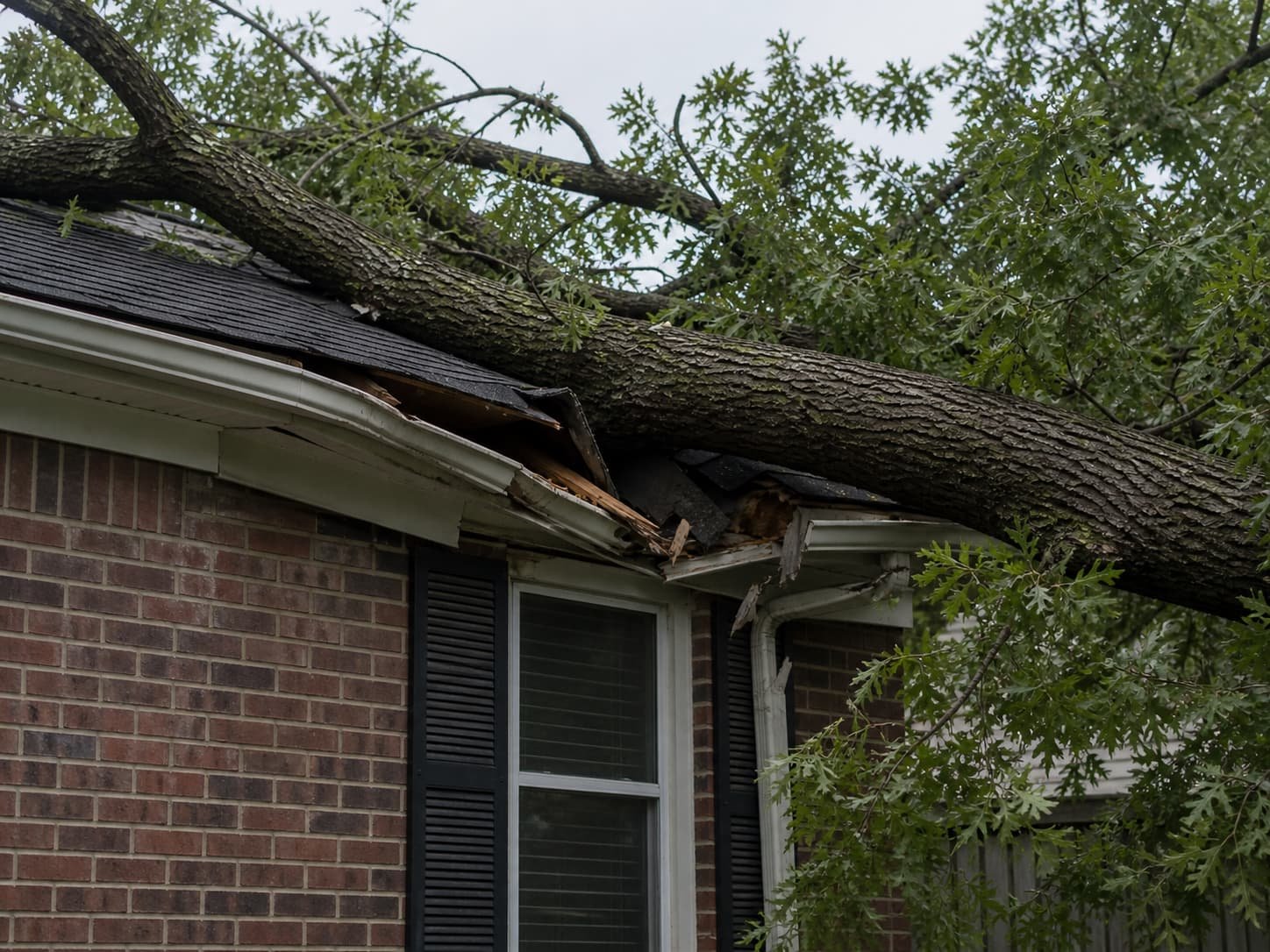
Emergency tree removal Lexington KY property owners need after a storm event has to be fast, competent, and safe. A half-fallen tree resting on a roof, a large branch pinning a vehicle, or a whole tree blocking the only access to your property is a live hazard until it’s dealt with properly — and improper handling makes the situation worse, not better. Lexington Trees responds to storm damage callouts across Lexington and Fayette County with the equipment, rigging, and experience to handle downed and hanging trees safely, including those in contact with structures, fences, and utility infrastructure.
Lexington’s storm season peaks in spring and again in late summer. The combination of full canopy leaf load, saturated soils from seasonal rainfall, and the high-wind events that track through Central Kentucky creates conditions for branch failure and whole-tree blow-overs that happen quickly and without much warning. Older hardwoods — white oaks and red maples in their fifth or sixth decade — are particularly vulnerable, especially where root systems have been disrupted by drought stress, construction, or grade changes over the years. A tree that looked fine in the morning can be on your roof by the afternoon.
What Emergency Response Actually Involves
When we arrive on-site, the first priority is assessment — not cutting. A tree resting on a structure is under load, and that load redistributes when any part of the tree is cut free. A branch that appears to be lying flat may be under significant tension. A trunk resting on a roofline may be holding weight that shifts the moment it’s released. Working without understanding the load distribution first is how injuries happen and how roofs get punched through by falling sections.
We assess every contact point before any cutting begins. Where the tree is resting on a structure, we use controlled cuts with rigging and lowering systems to remove sections in a sequence that releases load safely rather than all at once. Where the tree is on the ground but blocking access or pressing against a fence, the approach is more straightforward — but we still walk it before we start. Emergency work is not the place for shortcuts.
We do not leave a site until the immediate hazard is resolved. In most cases debris cleanup can be completed the same day. For larger storm events involving multiple trees or extensive debris, we may stage heavy material removal for the following morning and secure the site overnight.
Utility Line Contact — What to Do First
If any part of a fallen tree is in contact with power lines, do not approach the tree and do not call a tree company first. Call Kentucky Utilities or your local utility provider immediately. Utility companies have protocols for clearing tree contact from energised lines — they need to assess and confirm the line status before any contractor can safely work near the contact point. Treat all downed lines as live until the utility company confirms otherwise, regardless of how the lines look.
After the Emergency Is Cleared
Once the immediate hazard is dealt with, we can assess the remaining trees on your property for structural integrity and storm risk. A major storm event often causes visible damage to one tree while leaving stress fractures, root disruption, and hanging deadwood in adjacent trees that aren’t immediately obvious from the ground. A follow-up assessment is the best protection against the next event causing the same problem on a different tree.
Call us immediately for emergency response across Lexington and the surrounding Central Kentucky communities. For guidance on storm preparation and post-storm tree assessment, the International Society of Arboriculture publishes homeowner resources on tree risk and storm readiness.