
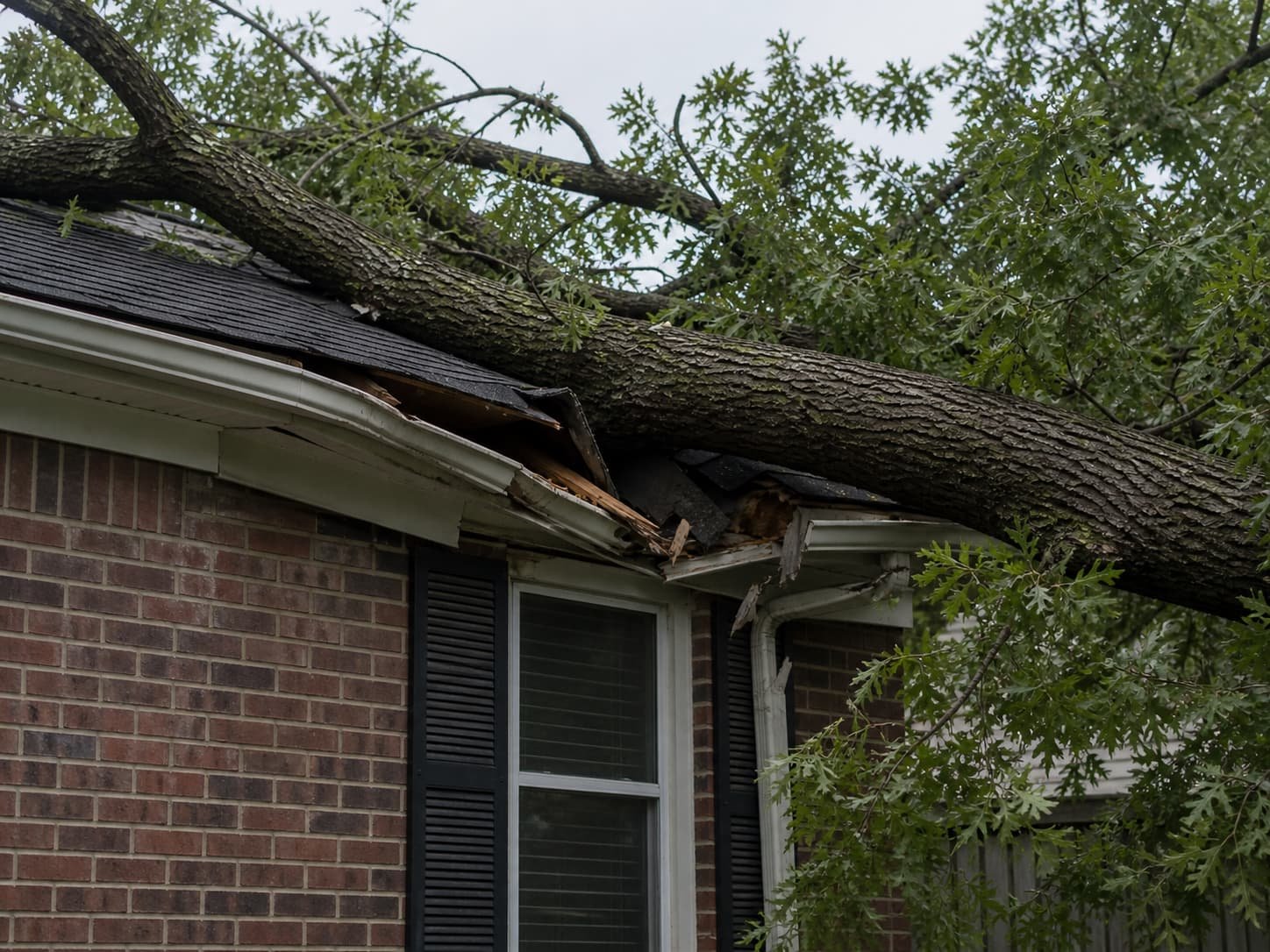
Emergency tree removal after a Lexington storm follows a predictable sequence — and knowing what to do in the right order keeps you safe, protects your property, and gets the hazard resolved faster. The decisions you make in the first thirty minutes after a tree comes down matter more than most homeowners realise. Here is the process, step by step.
Step One — Stay Clear of the Tree
If a tree has fallen against a structure, is resting on power lines, or is hanging partially broken in the canopy above, the immediate priority is to stay out of the area entirely. A hanging tree or partially broken branch that appears stable can shift without warning — the tension and compression forces in a partially failed tree are not visible from the outside, and what looks like a stable lean can release suddenly when disturbed by wind, vibration, or the continued decay of the remaining wood connection. Anyone standing underneath when it releases is at serious risk.
Keep children and pets away from the area. If the tree is against your house, resist the urge to go inside to assess damage from the inside — until the tree’s position is stabilised or removed, the structural situation in that part of the house is unpredictable.
Step Two — Call Your Utility Provider If Lines Are Involved
If any part of the fallen tree is in contact with power lines, call Kentucky Utilities or your local electricity provider before calling anyone else. Do not attempt to move the tree yourself, and do not allow a tree company to work near the contact point until the utility company has assessed the line status and confirmed whether lines are energised or de-energised.
Downed power lines that look dead may still be live. Lines that are not sparking or visibly arcing can still carry lethal current. The utility company has the equipment and protocols to assess and manage line contact safely — this step cannot be skipped or shortcut. Once the utility company has cleared the area or confirmed the lines are safe, tree work can proceed.
Step Three — Document Before Anything Is Moved
If you have a homeowners insurance claim in your future — and a tree on your roof almost certainly means you do — photograph the damage thoroughly before any debris is moved. Full shots of the fallen tree and the affected structure from multiple angles, close-up shots of the contact point and any penetration of the roofline or walls, images of collateral damage to fences, vehicles, outbuildings, and landscaping. Your insurance adjuster will need a complete picture of the damage as it was immediately after the event. Once cleanup begins, that evidence is gone.
Note the time and date of the photos. If your phone automatically geotags images, that’s useful supporting documentation. Send copies to a second location — email them to yourself or upload to cloud storage — so they’re not lost if your phone is damaged in subsequent events.
Step Four — Call a Tree Company You Trust
After a significant storm event in Lexington, demand for emergency tree work outstrips supply quickly. Companies that you’ve never heard of will appear in your neighbourhood within hours of a major storm — sometimes knocking on doors with verbal quotes and requests for cash deposits before work begins. This is a known post-storm phenomenon in Central Kentucky and across the region, and the companies operating this way are overwhelmingly either unlicensed, uninsured, or both.
Call a company that operates in your area before a storm — one with verifiable reviews, a local phone number, and a track record you can check. A company that asks for a large cash deposit before starting emergency work on a storm-damaged property is a company to avoid. Legitimate tree companies will assess the job, give you a written scope and price, and begin work without requiring full payment upfront.
What Professional Emergency Response Involves
When Lexington Trees responds to an emergency callout, the first action on-site is assessment — not cutting. We identify all contact points, assess the load distribution on the fallen tree or branch, and plan the removal sequence before any cutting begins. Trees resting on structures carry weight that redistributes when sections are cut free — a poorly sequenced cut can drive a tree section through a roof rather than lifting it clear. We use rigging and controlled lowering systems where needed, and we don’t leave a site until the immediate hazard is resolved.
Call Lexington Trees immediately for emergency storm response across Lexington and Central Kentucky. For storm preparation guidance and post-storm tree assessment resources, the International Society of Arboriculture publishes homeowner-facing materials on their website.