Tree removal signs are not always obvious. A tree can look healthy and intact from the street while carrying structural defects, internal decay, or root damage that makes it a genuine hazard. Most homeowners call too late — after a limb has already come down, or after a storm has pushed a failing tree into a structure. Knowing what to look for on your own property puts you in a position to act before the situation forces your hand.
Dead or Declining Crown
A dead crown — large areas with no leaves in summer, or significant sections that failed to leaf out this spring — is a clear indicator of serious decline. In Lexington’s native hardwoods, this typically points to one of three causes: severe root damage that has cut off water and nutrient supply to the upper crown; a vascular disease like oak wilt or Dutch elm disease that has blocked the tree’s internal transport system; or structural failure at the base of the crown that has severed the connection between the root system and the upper tree.
A few dead branches in an otherwise healthy, well-leafed crown is normal and addressable through trimming. Half a crown or more going bare is a different situation — that’s a removal conversation, not a trimming one. If you’re unsure which category your tree falls into, a professional assessment will give you a clear answer.
Trunk Cracks and Structural Defects
Visible cracks running vertically or spirally along the trunk indicate structural stress — the tree is under load that its structure can’t fully accommodate. Co-dominant stems with included bark — the V-shaped junctions where two leaders have grown together without forming proper wood connection — are one of the most common structural failure points in Lexington’s residential hardwoods. Red maples and silver maples in particular develop these junctions frequently, and a co-dominant stem on a mature tree adjacent to a structure is a genuine hazard that warrants assessment.
Large cavities in the trunk, particularly at the base or at major branch junctions, indicate internal decay. The question is how much structurally sound wood remains around the cavity — a small cavity in a large trunk may be manageable, while a large cavity that extends through more than a third of the trunk’s cross-section significantly compromises the tree’s structural integrity. This assessment requires a professional eye and in some cases probing or resistance testing to determine the extent of internal decay.
Significant Lean
Trees develop lean gradually over decades as they grow toward light — this is normal compensatory growth and is not inherently a hazard. What warrants concern is lean that has developed recently or noticeably increased over a short period. A tree that has shifted its lean angle within a season, or where you can see soil heaving or cracking on the opposite side of the lean, is losing root anchoring. This is a prompt assessment situation, not a monitor-and-see one.
Fungal Growth at the Base
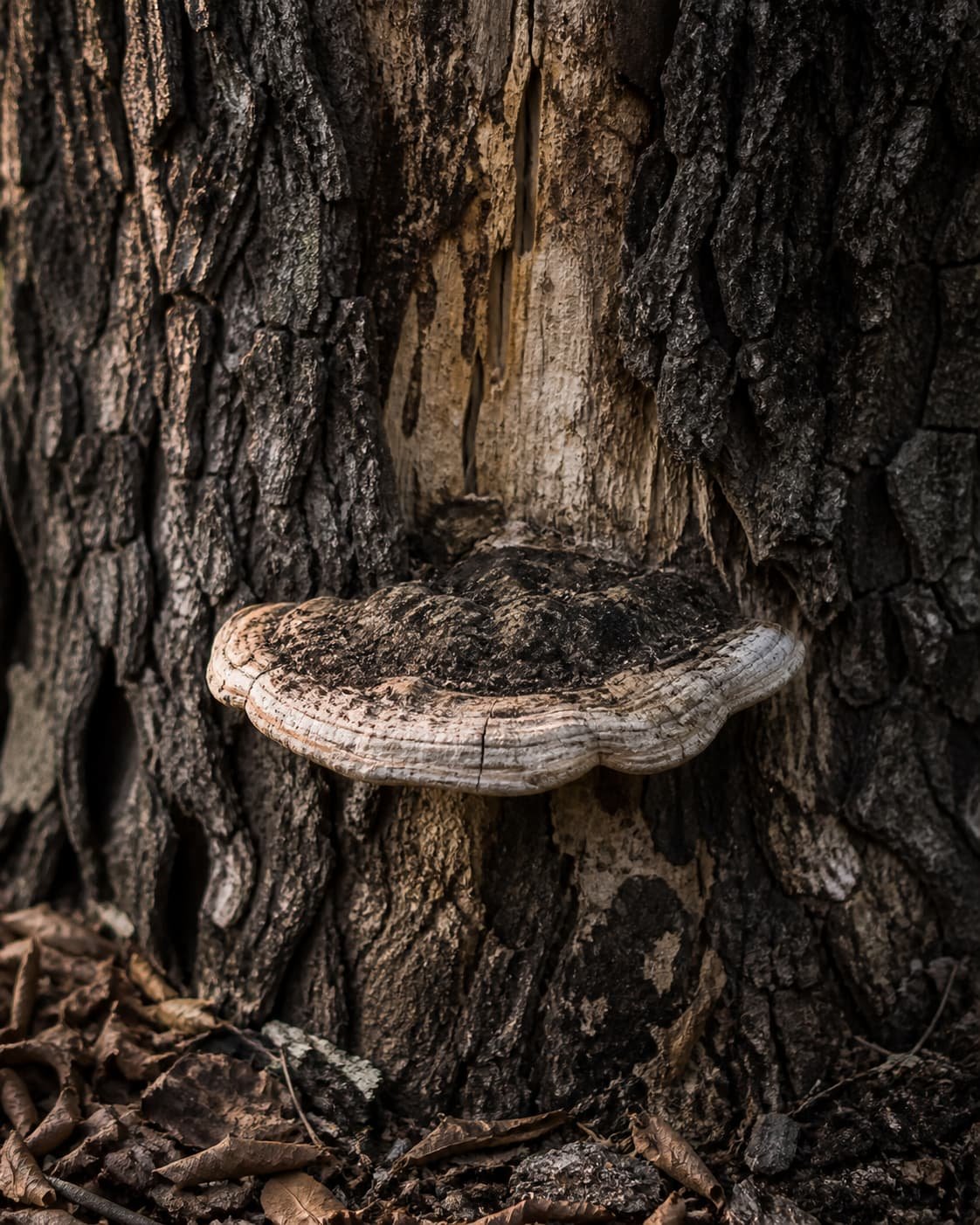
Shelf fungi — the bracket-shaped fruiting bodies that grow at the base of the trunk or on major root buttresses — are one of the most reliable visible indicators of advanced internal decay. The fungal fruiting body only appears once the decay colony inside the tree is well established. By the time you can see a shelf fungus at the base of a tree, the structural integrity of the trunk base is already compromised. This is not something to monitor for another season — it warrants a professional assessment promptly.
Root Zone Disruption
Root damage doesn’t announce itself above ground immediately, but the results appear over one to three years after the damage occurs. Construction activity within the drip line, utility trenching that cuts through major roots, grade changes that bury the root crown, and soil compaction from vehicle traffic all damage root systems in ways that eventually show up as crown decline, premature leaf drop, thin canopy, and branch dieback. If significant work has been done near a mature tree in the past two to five years and you’re now seeing canopy changes, root damage is a likely cause.
Lexington’s established neighbourhoods have seen decades of utility work, driveway repairs, and construction activity that has progressively compromised the root systems of mature street and yard trees. Many of these trees are still standing and still leafing out, but carrying root damage that makes them structurally unreliable in a significant storm event.
When to Call for an Assessment
If you’re seeing any combination of the signs above — or if something about a tree on your property simply looks different from how it looked a year ago — a free on-site assessment is the right next step. Call Lexington Trees and we’ll walk the tree with you, give you an honest evaluation, and tell you clearly whether we recommend removal, trimming and monitoring, or no action at this stage.
For consumer resources on tree risk assessment and what a professional evaluation involves, the International Society of Arboriculture publishes detailed guidance on their website.